
Yes, you can lose weight without exercise if you consistently take in fewer calories than your body uses. Structured workouts are not required for weight loss, although regular physical activity provides important health benefits and can make weight management easier.
A calorie deficit can come largely from changes to what and how much you eat. Adjusting portions, choosing filling nutrients rich foods, getting enough sleep and changing everyday eating habits can all support a lower calorie intake. Your metabolism, medications, health conditions, and other individual factors can also affect how quickly your weight changes.
This guide explains the practical ways to lose weight without exercising and what research says about each one.
How Weight Loss Without Exercise Works
Weight loss without exercise works the same way as weight loss with exercise. You lose weight when your body uses more energy than you take in. However, your results can also depend on your type of body fat and where your body stores it. Some people carry more fat around the abdomen, while others store more fat under the skin around the hips, thighs, or other areas.
Your body does not choose one specific area to lose fat from first. As you lose overall body fat, the amount and location of the changes can vary from person to person. Exercise still supports muscle, heart health, and fitness, even when your main goal is weight loss.
Here’s what that actually looks like, and what it still doesn’t replace.
Do You Need a Calorie Deficit to Lose Weight?
A calorie deficit means you eat less energy than your body uses in a day. As a rough starting point, a 500-calorie daily deficit is often associated with close to a pound of fat loss per week early on, since a pound of fat holds about 3,500 calories. That pace typically slows over time as your body adjusts to a lower weight, so this works better as a starting estimate than a fixed guarantee. According to the Dietary Guidelines for Americans, healthy eating should focus on nutrient-dense foods and overall dietary patterns, not just calorie reduction.
Can You Lose Weight Without Losing Muscle?
Skipping exercise doesn’t stop weight loss, but it trades away a few things diet alone can’t replace. Your body holds onto less muscle when it isn’t regularly asked to move or carry load. Your heart and lungs miss out on conditioning that protects your health long after the number on the scale changes.
That gap shows up in a few specific ways:
- Weaker bone density support over time
- More muscle lost alongside fat during weight loss
- Less cardiovascular conditioning
- Reduced protection against chronic conditions like diabetes and heart disease
What Has the Biggest Impact on Weight Loss Without Exercise?
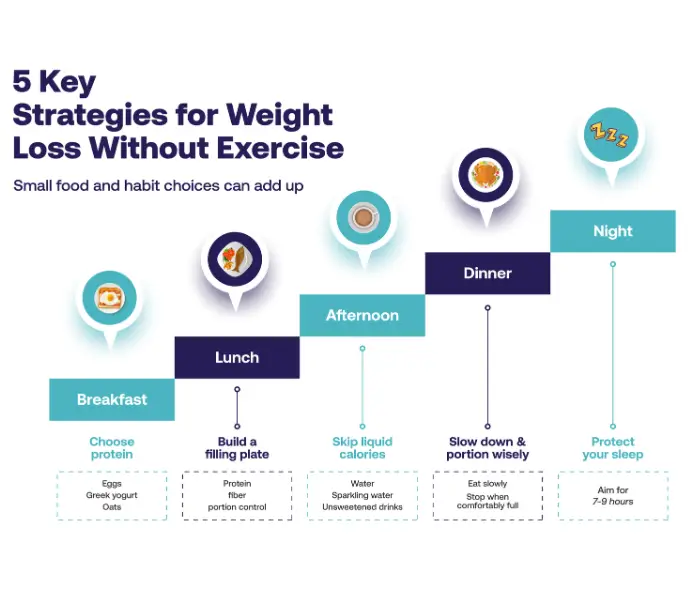
Food choices create most of the calorie deficit that drives weight loss without exercise, while sleep, stress, and daily eating habits shape how well you stick with it.
Here’s how each of these actually shows up in your daily choices.
Food Choices That Help Create a Calorie Deficit
The food choices with the biggest effect on weight loss are the ones that lower calorie intake without leaving you hungry. Protein, fiber, and portion size can make that easier to do than relying on any single diet plan.
- More Protein. Protein can increase fullness and reduce hunger, which may make it easier to eat less at later meals.
- More Fiber. Fiber-rich foods can increase fullness and may help you stay satisfied between meals.
- Portion Control. Smaller portions and mindful eating can reduce calorie intake without cutting out any foods.
- Sugary Drinks. Sugary drinks can add calories quickly without providing as much fullness as some solid foods, making them an easy place to reduce calorie intake.
- Home Cooking. Cooking at home lets you see and control the ingredients and portions that go into a meal.
Eating Habits That Make Weight Loss Easier
Weight management also depends on habits around eating, not just what sits on your plate. How fast you eat, whether you drink water before meals, and how closely you track intake can all influence your eating habits and calorie intake.
- Eating Slowly. Eating more slowly may give you more time to notice fullness and can help some people eat less.
- Water Before Meals. A glass of water before eating may help some people eat less at that meal.
- Food Tracking. A simple log shows patterns in your eating that are easy to miss otherwise.
Sleep and Stress Can Affect Weight Management
Sleep and stress can affect weight management by influencing hunger, food choices, eating habits, and other factors that make a calorie deficit easier or harder to maintain.
- Sleep Quality. Poor sleep can increase hunger and calorie intake, although changes in appetite-regulating hormones such as ghrelin and leptin are not consistent across studies.
- Chronic Stress. Ongoing stress can affect the body’s stress-response system and may influence appetite, eating behavior, and where body fat is stored.
Is Losing Weight Without Exercise Safe for Everyone?
Diet-only weight loss is safe for most healthy adults, but not for everyone. Pregnancy, certain medical conditions, and a history of disordered eating all change what counts as a safe approach.
Here’s who should slow down and check first.
Who Should Get Medical Guidance First
A few situations call for a doctor’s input before you start cutting calories, since general guidance carries more risk for some people than others.
- You’re pregnant or breastfeeding
- You have a history of disordered eating
- You’re under 18 or over 65
- You manage a chronic condition like diabetes or heart disease
- You take medication that affects appetite, blood sugar, or metabolism
When Calorie Restriction Becomes Unsafe
Restriction can go too far, and when it does, it affects your energy, mood, and relationship with food, even while the number on the scale keeps moving the right direction.
- Constant fatigue or irritability that doesn’t ease up
- Skipping meals to make up for eating earlier
- Feeling anxious or guilty around normal amounts of food
- Losing weight faster than feels sustainable for you
None of this means something is wrong with you. It usually means the plan needs to slow down, not that you need to try harder.
What Can Prevent Weight Loss Without Exercise?
Several factors can stall weight loss even when your diet looks consistent on paper. Hidden calories, certain medications, and a few underlying health conditions are common, overlooked culprits.
Here’s where progress usually gets stuck.
Hidden Calories
Calories add up in places that rarely show up in a mental tally, especially on weekends or during stressful weeks when eating patterns loosen.
- Alcohol, which carries about 7 calories per gram with little nutritional value
- Coffee drinks, smoothies, and other beverages beyond plain water
- Dressings, sauces, and condiments added on top of otherwise healthy meals
- Weekend eating that doesn’t match weekday effort
Medical Factors
A calorie deficit doesn’t always translate into weight loss at the same pace for everyone, since some medical factors change how your body responds.
- PCOS, which is often linked to insulin resistance
- Thyroid conditions that slow metabolism
- Medications such as beta-blockers, certain antipsychotics, insulin, or hormonal birth control
- Hormonal shifts around perimenopause and menopause and cause hormonal belly fat
If you recognize yourself in this list, that’s a reason to loop in your doctor, not a reason to give up on the approach.
Inconsistent Habits
Progress often stalls less from one big mistake and more from small patterns that repeat quietly, week after week, without ever standing out on their own.
- Restricting hard during the week, then overeating on weekends
- Stress-driven eating that shows up as snacking rather than meals
- Restarting a new plan every few weeks instead of adjusting the current one
Consistency, pushing yourself hard for a few days. A plan you can keep up with is more likely to last.
What Is the Best Weight Loss Approach for Obese People?
The right approach depends on where you’re starting from, not just where you want to end up.
If you’re overweight and don’t have any underlying health condition, a steady calorie deficit combined with regular movement is often enough to see real progress. Eating a bit less than your body burns each day, consistently, tends to work on its own over time.
If you fall into the obese BMI range, or you’re managing a condition like diabetes, thyroid issues, or PCOS, a calorie deficit alone usually isn’t enough. Weight at this level is often tied to hormonal or metabolic factors that diet and exercise can’t fully override by themselves. In these cases, a structured medical weight loss approach gives you a much better shot at real, lasting results.
Medical weight loss starts with your health needs, not a generic meal plan. A physician reviews your labs, health history, and current medications to understand what’s actually driving the weight gain. From there, treatment may include an FDA-approved weight-loss medication, such as a GLP-1, prescribed based on your specific needs, along with nutrition guidance and regular check-ins to adjust the plan as your body responds.

Conclusion
Yes, you can lose weight without exercising. Your food intake, portions, sleep, and daily eating habits can create the calorie deficit needed for weight loss, even when structured workouts aren’t part of your routine.
But if you’re eating less, making consistent changes, and still seeing little or no progress, don’t assume you simply need more discipline. Medications, health conditions, hormonal changes, and other factors can make weight loss harder.
You don’t have to keep cutting calories on your own. If your results don’t match the effort you’re putting in, a conversation with a doctor can help you understand what may be getting in the way and whether a medical weight loss plan makes sense for you.
Frequently Asked Questions About Weight Loss Without Exercise
You can lose weight without formal exercise, but weight loss still requires an energy deficit. You can create that deficit through changes in food intake and eating habits rather than structured workouts.
You can support weight loss without exercise by managing portions, choosing filling foods, limiting calorie-containing drinks, cooking more meals at home, and building eating habits you can maintain consistently.
The amount of weight you can lose without exercise varies from person to person. Your calorie intake, body size, medications, health conditions, and other factors can affect both the rate and amount of weight loss.
You cannot choose where your body loses fat first. Losing overall body fat through a sustained calorie deficit may reduce abdominal fat over time, but the rate and pattern vary between individuals.
If your weight is not changing despite consistent efforts, factors such as calorie intake, medications, health conditions, hormonal changes, and normal changes in body weight may be worth reviewing with a doctor.