
You’ve probably seen the headlines. A celebrity mentions testosterone therapy, drops thirty pounds, and suddenly everyone’s asking the same question in the comments section: does TRT help with weight loss, or is this just another wellness trend dressed up in medical language?
Here’s the direct answer. Testosterone replacement therapy can support weight loss in men who have clinically low testosterone, but it isn’t a fat-burning shortcut, and it won’t work the same way for two people with different starting points. The relationship between testosterone and weight loss is real, backed by published research, and worth understanding before you decide whether TRT belongs in your health plan.
At Maverick Medical Clinic in Bakersfield, we get this question constantly from men managing fatigue, stubborn belly fat, and stalled progress at the gym despite doing everything “right.” Some have tried every diet plan Kern County gyms recommend. Others just feel like their body stopped responding the way it used to. So let’s dig into what the evidence actually says, and where the marketing gets ahead of the science.
The Short Version: What TRT Actually Does
TRT does not directly torch fat cells the way a stimulant or appetite suppressant might. Instead, it recalibrates several systems that influence how your body stores and burns energy. Think of it less as a weight loss drug and more as a hormonal reset that removes obstacles standing in your way.
| Mechanism | What Happens | Why It Matters for Weight |
| Lean muscle preservation | Testosterone slows age-related muscle loss (sarcopenia) | More muscle means a higher resting metabolic rate |
| Fat cell regulation | Testosterone influences how fat is stored, especially around the abdomen | May reduce visceral fat accumulation over time |
| Appetite hormone balance | Interacts with leptin and ghrelin signaling | Can help regulate hunger cues, though effects vary by individual |
| Insulin sensitivity | Improved glucose uptake in some men | Better blood sugar control can reduce fat storage tendency |
| Energy and motivation | Corrects fatigue tied to low T | Makes consistent exercise more realistic to sustain |
None of these mechanisms guarantee weight loss on their own. They shift the odds in your favor, particularly if low testosterone was the hidden obstacle keeping your metabolism sluggish in the first place. And that’s really the crux of it. TRT works best as a correction, not a cure-all.
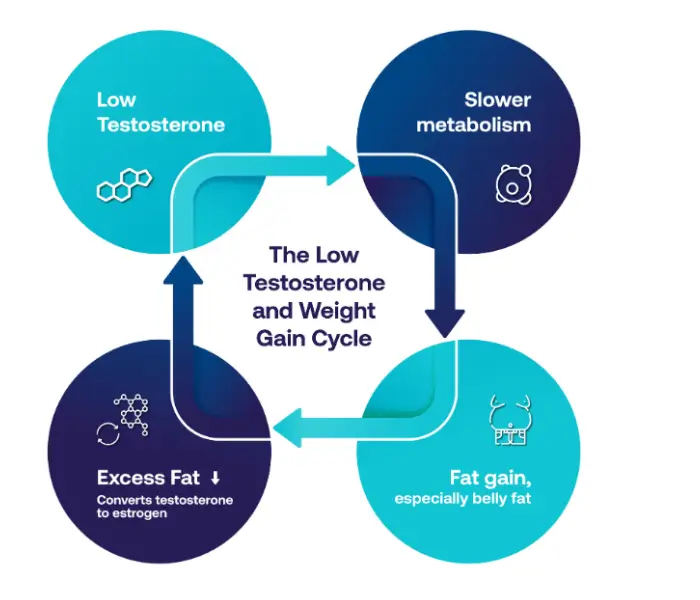
Will TRT Help Me Lose Weight?
This is the question we hear most often, and honestly, the answer hinges on one factor above all others: whether your testosterone is actually low to begin with.
If your levels sit within a normal range, TRT is unlikely to produce meaningful weight change, and prescribing it wouldn’t be medically appropriate in that case. Testosterone therapy isn’t something a healthy man takes to speed up an already-functioning metabolism. It’s a corrective treatment for a diagnosed deficiency.
For men with confirmed hypogonadism, though, a fairly different picture emerges. A long-term observational registry study following 411 obese, hypogonadal men for up to eight years found that testosterone therapy produced significant, sustained weight loss across all obesity classes, with reductions in both waist circumference and BMI that held steady over time rather than rebounding, as often happens after crash diets or short-term calorie restriction (source: National Library of Medicine, PMC4722240). Men in the class I obesity group saw average weight drop from roughly 226 pounds down to about 185 pounds over the study period, alongside meaningful reductions in waist size.
That’s a meaningfully different outcome than what most quick-fix weight loss interventions deliver, and it’s worth sitting with for a moment. This wasn’t a twelve-week transformation photo. It was years of consistent, physician-monitored treatment.
Average Weight Loss on TRT: Setting Realistic Expectations
Numbers get thrown around loosely in this space, so let’s ground this in what’s actually documented. Results vary widely depending on baseline weight, duration of treatment, and whether TRT is combined with lifestyle changes, but here’s a general picture pulled from clinical literature:
| Timeframe | Reported Outcome | Notes |
| 6 months to 1 year | Modest reductions in fat mass and waist circumference | Most noticeable in men with obesity and confirmed low T |
| 2 to 3 years | Continued, gradual fat loss with lean mass gains | Effects tend to plateau without lifestyle support |
| 5 to 8 years (long-term studies) | Substantial, sustained weight loss in some hypogonadal cohorts | Achieved under medical supervision, not TRT alone |
Notice the pattern. TRT weight loss tends to unfold gradually, not overnight, and the men who saw the biggest changes were also managed closely by a physician over an extended period. There isn’t a universal number we can promise you, and any provider who does is skipping past the nuance, or worse, selling you something.
We’d rather set expectations honestly upfront than have you disappointed three months in.
TRT Fat Loss vs. TRT Alone vs. Lifestyle Changes
A gap we noticed scanning around online: most articles frame this as an either/or question. It isn’t. Here’s how the pieces typically fit together.
- TRT alone, without dietary or activity changes, tends to produce smaller, slower results. You might feel more energized, but the scale may barely move.
- Lifestyle changes alone (diet, exercise, sleep) can improve testosterone naturally in some men, but won’t correct a true clinical deficiency. Genetics, age, and underlying conditions sometimes override even excellent habits.
- TRT combined with structured lifestyle support is where the research shows the most consistent, durable body composition improvements. One clinical trial examining testosterone alongside a very low-calorie diet found that men receiving testosterone lost significantly more fat mass and visceral fat over 56 weeks compared to those on the diet alone.
If you’re hoping testosterone therapy replaces the need to move more or eat differently, that expectation needs adjusting early. It’s a supportive tool, not a substitute for effort. Think of it as removing a hormonal handbrake, not installing a new engine.
How Does TRT Compare to GLP-1 Medications for Weight Loss?
This is a question we’re hearing more often as GLP-1 medications dominate weight loss conversations nationally, and it’s a fair one to ask.
GLP-1 drugs work primarily by suppressing appetite and slowing digestion, often producing faster, more dramatic weight loss numbers in a shorter window. TRT works through an entirely different pathway, focused on hormonal correction, muscle preservation, and metabolic function rather than appetite suppression alone.
They aren’t interchangeable, and they aren’t necessarily competitors either. Some men are candidates for one, some for the other, and occasionally, when clinically appropriate, both approaches get discussed together. The right fit depends entirely on your bloodwork, your health history, and your goals, which is exactly the kind of conversation worth having with your doctor rather than deciding from a forum post.
Possible Risks and Side Effects Worth Knowing
No treatment comes without tradeoffs, and TRT is no exception. Responsible providers will walk you through potential risks before starting treatment, which may include:
- Changes in red blood cell counts, requiring periodic monitoring through bloodwork
- Potential effects on prostate health, which is why baseline screening matters for eligible men
- Skin reactions at injection or application sites, depending on delivery method
- Possible impact on fertility, an important consideration for younger men still planning families
- Mood or sleep changes in some patients, which typically resolve with dosage adjustments
None of this means TRT is inherently risky for the right candidate. It means ongoing monitoring, not a one-time prescription and goodbye, is part of doing this safely. That’s exactly why we schedule regular follow-up labs for patients on therapy here in Bakersfield.
Who Should Actually Consider TRT for Weight Loss
TRT isn’t the right fit for everyone chasing a lower number on the scale. Candidates our care team typically evaluates for testosterone therapy include men who:
- Have documented low testosterone confirmed through bloodwork, not just symptoms alone
- Experience persistent fatigue, reduced motivation, or stalled muscle gains despite consistent training
- Have struggled with abdominal weight gain that hasn’t responded to diet and exercise adjustments
- Are managing related conditions like metabolic syndrome, prediabetes, or low libido alongside weight concerns
- Are willing to commit to ongoing monitoring and lab work rather than a one-and-done approach
Testing comes first. Guessing does not. A simple blood panel tells us more in fifteen minutes than months of trial and error ever could, and it protects you from starting a treatment that was never going to help in the first place.
What Getting Started Actually Looks Like
If you’re curious whether this applies to you, the process is more straightforward than most men expect. It typically starts with a conversation about symptoms, followed by bloodwork to check total and free testosterone levels, along with other relevant markers like thyroid function or blood sugar.
From there, your provider reviews results together with you, discusses whether therapy makes sense, and if so, walks through delivery options and a monitoring schedule tailored to your situation. No two treatment plans look identical, because no two patients start from the same place.
When to Talk to a Doctor
If you’ve noticed unexplained fatigue, declining strength, mood changes, or weight gain that won’t budge despite genuine effort, that combination is worth a conversation, regardless of whether TRT ends up being the answer. Dr. Terrance McGill and our team in Bakersfield can run the appropriate labs and walk you through what your results actually mean for your specific situation, without pressure toward any particular treatment.
We also offer Medical Weight Loss and Testosterone Replacement Therapy as connected services here at Maverick Medical Clinic, since for many men, the two overlap more than they realize. Same-day appointments are available, and we accept most major insurance plans including Medicare and Medicaid, along with self-pay options for patients who prefer it.

Conclusion
Does TRT help with weight loss? For men with a genuine, bloodwork-confirmed testosterone deficiency, the research says yes, though gradually and best alongside real lifestyle effort, not in place of it. For men with normal testosterone, it isn’t the answer, no matter how appealing the promise sounds. The only way to know which category you fall into is testing, not guessing.
If you’re in Bakersfield and wondering whether hormones are behind your stalled progress, that’s exactly the conversation we’re here to have.
Frequently Asked Questions
No. Meaningful weight loss benefits appear primarily in men with clinically confirmed low testosterone. Men with normal levels typically won’t see significant changes from therapy alone, and prescribing TRT without a diagnosed deficiency isn’t standard practice.
Results vary widely. Some men see modest fat loss within the first year, while longer-term studies in hypogonadal patients show more substantial, sustained reductions over several years, particularly when combined with lifestyle changes.
No. TRT may make it easier to build muscle and manage appetite, but it works best alongside consistent nutrition and physical activity, not instead of them.
The only reliable way is a blood test. Symptoms like fatigue, reduced muscle tone, and abdominal fat gain can overlap with several conditions, so proper testing matters before assuming testosterone is the culprit.
Yes, which is why TRT is typically reserved for men with a confirmed deficiency rather than prescribed purely as a weight loss aid. Ongoing monitoring helps manage any potential side effects.
Yes, though the approach differs. We address hormone-related weight changes in women through our dedicated Hormone Replacement Therapy services, tailored to menopause and related symptoms.