Fat often gets a bad reputation, but it plays a vital role in keeping the body healthy and balanced. Learning about the types of body fat helps you understand how your body stores energy, protects organs, and regulates hormones. Human fat is not one single substance. It comes in several forms, each with its own job and location in the body. This guide breaks down every category in simple terms, so you can see exactly how fat works for you rather than against you.
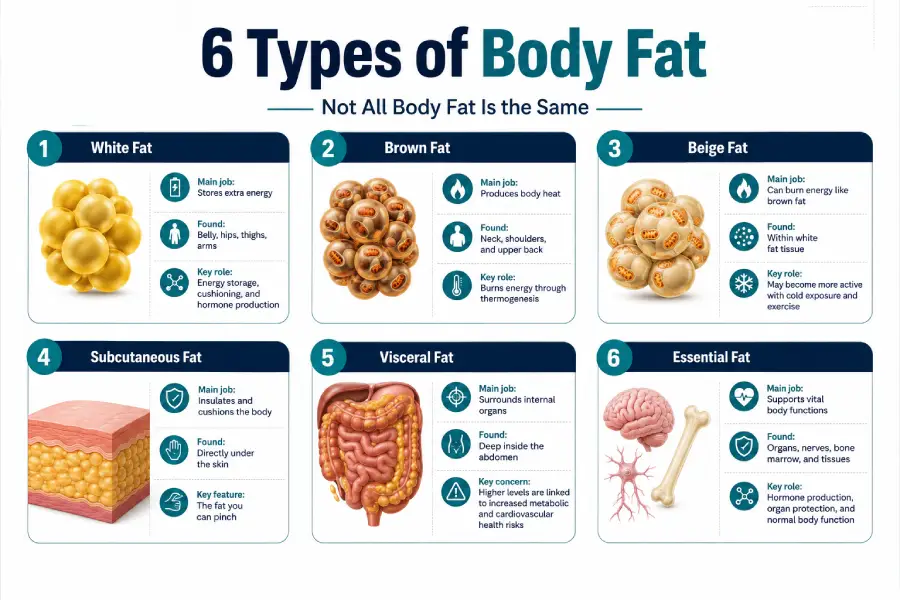
The human body stores fat in three main forms: subcutaneous fat (under the skin), visceral fat (around internal organs), and essential fat (needed for basic body functions). Beyond these, fat cells also differ by function, splitting into white fat, brown fat, and beige fat. White fat stores extra energy for later use, brown fat burns energy to produce body heat, and beige fat can switch between the two roles depending on temperature and activity.
What Is Body Fat and Why Does the Body Need It?
Fat, or adipose tissue, is a living part of the human fat system that stores energy for later use. It is not simply “extra weight.” Fat tissue works as its own organ with real jobs to do, including:
- Storing energy: Fat holds calories the body can use later, especially between meals.
- Cushioning organs: A layer of fat protects the kidneys, heart, and other organs from everyday shocks.
- Regulating hormones: Fat tissue releases hormones that control hunger, metabolism, and inflammation.
- Insulating the body: Fat under the skin helps trap heat and keeps body temperature steady.
Because of these jobs, some amount of fat is always necessary, no matter how lean a person becomes.
What Are the Three Main Types of Fat in the Body?
Scientists classify the types of fat in the body by how the tissue behaves at a cellular level. There are three recognized categories.
White Fat
White fat is the most common form of fat tissue in adults. It stores extra calories as energy and releases them slowly whenever the body needs fuel between meals. Most of the fat a person can pinch on the arms, belly, or thighs is white fat, and it also cushions organs and produces hormones linked to appetite control.
Brown Fat
Brown fat behaves differently from white fat. Instead of only storing energy, it burns calories to produce heat, a process known as thermogenesis. Babies carry more brown fat to stay warm in cold conditions, while adults keep smaller amounts, mostly around the neck, shoulders, and upper back.
Beige Fat
Beige fat sits between white and brown fat in both looks and function. It starts out behaving like white fat but can shift toward brown-like, calorie-burning behavior when the body gets cold or becomes more active. Regular exercise and cold exposure may encourage this shift over time.
What Is the Difference Between Subcutaneous and Visceral Fat?
When doctors talk about 2 types of fat, they usually mean where fat sits in the body rather than what it is made of. This location-based grouping matters just as much as the cellular type.
| Subcutaneous fat: This layer sits just beneath the skin and is the fat a person can pinch with their fingers. It gives the skin a smooth shape, helps keep the body warm, and is generally less risky to overall health. | Visceral fat: This fat wraps around internal organs such as the liver, stomach, and intestines. It sits deeper in the abdomen and cannot be pinched from outside. Higher visceral fat levels are linked to greater health risks, even in people who appear slim. |
Each type of body fat by location carries its own health impact, even though both layers exist under the same skin and can shift with lifestyle changes.
What Is Essential Fat and Storage Fat?
Fat can also be grouped by its purpose in the body rather than its location or cell type. These functional body fat types explain why some fat is required, while other fat is simply extra.
- Essential fat: This is the minimum amount of fat needed for basic body functions. It supports hormone production, protects nerves, cushions organs, and keeps the reproductive system working properly.
- Storage fat: This is the extra fat the body keeps in reserve for future energy use. It commonly builds up in the belly, hips, thighs, and other typical storage areas.
A healthy fat body keeps a working balance between these two categories. Too little essential fat can harm organ function and hormone balance, while too much storage fat can raise the risk of disease over time.
How Do Body Fat Types Differ in Women?
The types of body fat female bodies carry often differ from typical male patterns because of biology and hormones. Key differences include:
- Higher essential fat needs: Women naturally require a higher percentage of essential fat to support reproductive health and hormone balance, including estrogen production.
- Different storage patterns: Fat tends to gather around the hips, thighs, and chest in women, a pattern often called a “pear shape,” compared to the more common abdominal pattern seen in men.
- Hormonal influence: Shifts in estrogen and progesterone across life stages, including pregnancy and menopause, can change where fat is stored on the body.
This distribution is a normal biological pattern and is not, by itself, a sign of poor health.
Is It Possible to Have 0% Body Fat?
Many people wonder, “is it possible to have 0 body fat?” The honest answer is no. Since essential fat supports organs, hormones, and nerve protection, a body with zero fat could not function properly. Consequences of extremely low body fat can include:
- Hormone imbalance, which can disrupt reproductive and metabolic health.
- Organ strain, since fat normally cushions and supports internal organs.
- Weakened immunity, as fat tissue plays a role in immune signaling.
Even elite athletes and competitive bodybuilders keep a small percentage of essential fat, even during their leanest competition periods.
What Are Healthy Body Fat Percentages?
Body fat percentage is measured differently for men and women because of biological differences in hormone needs and reproductive function. The American Council on Exercise (ACE) breaks these percentages into five clear categories, ranging from essential fat up to obesity. Use this table as a general reference, not a strict rule, since factors like age, muscle mass, and genetics also affect where a person naturally falls.
| Category | Women | Men |
| Essential Fat | 10–13% | 2–5% |
| Athletes | 14–20% | 6–13% |
| Fitness | 21–24% | 14–17% |
| Acceptable (Average) | 25–31% | 18–24% |
| Obese | 32%+ | 25%+ |
Why Does Knowing These Body Fat Types Matter for Your Health?
Understanding the different types of body fat gives a clearer picture of overall health, beyond just a number on the scale. It explains why two people with the same body weight can have very different health outcomes, depending on where and how their fat is stored. This knowledge can guide smarter choices around diet, exercise, and regular health checkups, rather than focusing on weight alone.
How Can You Naturally Balance Your Body Fat Levels?
Small, consistent habits can help manage fat levels in a healthy way:
- Move regularly: Both cardio and strength training help manage visceral fat levels over time.
- Eat balanced meals: A diet rich in fiber, protein, and healthy fats supports steady energy without excess storage fat.
- Sleep well: Poor sleep is linked to higher visceral fat buildup over months and years.
- Manage stress: Chronic stress raises cortisol, a hormone that can encourage fat storage around the belly.
- Track health markers: Waist measurements and body composition scans often give better insight than scale weight alone.
What Is the Best Way to Reduce Visceral Fat?
For many people, diet and exercise alone are not enough to bring stubborn fat, especially visceral fat, down to a healthy level. In these cases, medical weight loss helps a lot. Unlike generic diet plans, a medical weight loss program is built and monitored by healthcare professionals who look at a person’s full health picture before recommending a plan.
A proper medical weight loss program usually includes:
- Health assessment: Bloodwork and body composition tests find the real cause of excess fat.
- Physician-guided treatment: Prescription support (like GLP-1 medications) paired with nutrition guidance, under medical supervision.
- Ongoing monitoring: Regular check-ins adjust the plan and prevent fat regain.
- Fat-focused, not just weight-focused: Targets storage and visceral fat while protecting essential fat and muscle.
This approach tends to work better than crash diets because it treats fat loss as a medical process. It also lowers the risk of losing muscle or dropping essential fat too low, which the body cannot function without.
If you want a structured, doctor-supervised way to lower body fat safely, Maverick Medical’s medical weight loss program is a solid place to start. Their team builds a plan around your personal health profile, so you can get a healthier body fat balance with proper medical support.
Final Thoughts
Fat is not the enemy it is often made out to be. From cushioning joints to producing hormones and generating heat, every form of fat supports the body in its own way. Recognizing the differences between these fat categories makes it easier to set realistic, informed health goals instead of chasing an unrealistic idea of a fat-free body. A balanced lifestyle, rather than extreme fat loss, remains the most sustainable path toward long-term wellbeing.