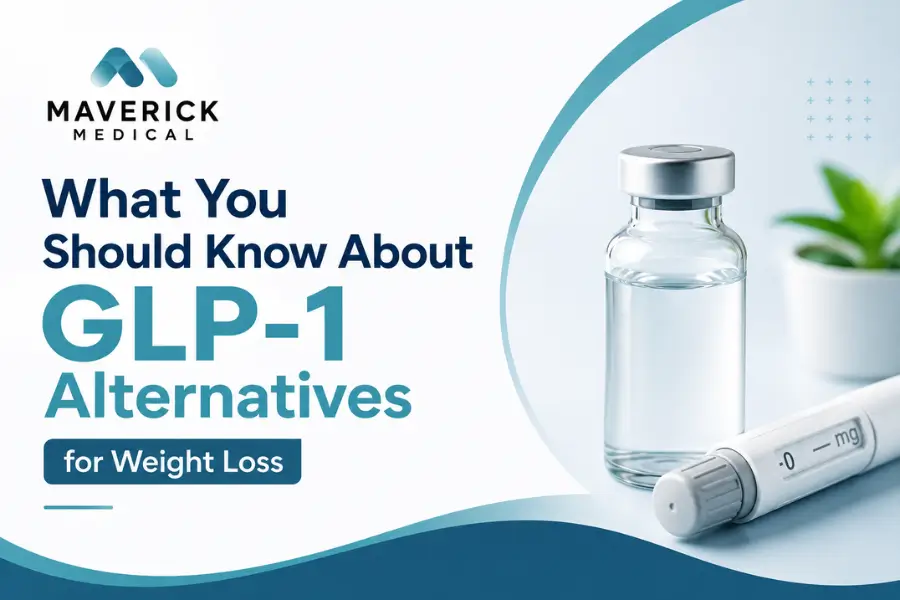
If you’ve tried diets, exercise plans, and lifestyle programs without lasting results, you’re not out of options. GLP-1 medications have become a major part of medical weight management, but they are not the only prescription options available.
GLP-1 alternatives for medical weight loss include Qsymia, Contrave, Orlistat, and Phentermine. These medications work through different pathways to help manage appetite, food intake, or fat absorption.
This guide compares GLP-1 shots with non-GLP weight loss medications so you can see how they differ and what to discuss with your healthcare provider.
What GLP-1-Based Weight Loss Medications Actually Do
GLP-1 weight loss medications work by copying the action of a hormone your gut already makes. This hormone is called GLP-1, or glucagon-like peptide-1. Your body releases it after you eat. It signals your brain that you are full. It also slows down how fast food leaves your stomach. This helps you eat less without feeling deprived. GLP-1 also helps your pancreas manage blood sugar more effectively.
Doctors first prescribed GLP-1 medications to treat type 2 diabetes. Over time, some of these same medications received separate FDA approval for chronic weight management in people without diabetes. This is an important distinction. Not every GLP-1 medication is approved for weight loss. Some are approved only for diabetes.
The main medications in this class include:
| Medication | Brand | FDA-approved weight-management use |
| Semaglutide | Wegovy | Yes |
| Liraglutide | Saxenda | Yes |
| Tirzepatide | Zepbound | Yes |
| Dulaglutide | Trulicity | No |
These medications target hormone pathways involved in appetite, food intake, and blood sugar regulation. Semaglutide, liraglutide, and dulaglutide act on the GLP-1 receptor, while tirzepatide acts on both the GIP and GLP-1 receptors.
What are GLP-1 Alternatives for Weight Loss
Non-GLP-1 alternatives for weight loss work through mechanisms that have nothing to do with gut hormones. Some suppress appetite through the brain and central nervous system. Others block fat absorption directly in the gut.
Here is how each of these medications works.
Qsymia (phentermine/topiramate ER)
Qsymia combines phentermine, an appetite suppressant, with topiramate, a medication that can affect appetite and food intake. It is approved with a reduced-calorie diet and increased physical activity for certain adults and adolescents with obesity, as well as adults with overweight and at least one weight-related condition.
Qsymia contains phentermine, which is a Schedule IV controlled substance. The current FDA label lists pregnancy, glaucoma, hyperthyroidism, and use of or recent treatment with monoamine oxidase inhibitors among its contraindications.
Contrave (naltrexone/bupropion)
Contrave combines naltrexone, an opioid antagonist, with bupropion, an aminoketone antidepressant. The combination is used with a reduced-calorie diet and increased physical activity to help adults with obesity, or adults who are overweight with at least one weight-related comorbidity, lose weight and maintain weight reduction.
The Contrave prescribing information lists seizure disorders, uncontrolled hypertension, anorexia nervosa or bulimia, chronic opioid use, and use of other bupropion-containing products among its contraindications.
Orlistat (Xenical, Alli)
Orlistat works differently from appetite-suppressing medications. It blocks lipase, an enzyme needed to digest dietary fat, which reduces the amount of fat the body absorbs. At the prescription dose, it reduces dietary fat absorption by about 30%. Xenical is the prescription-strength version, while Alli contains a lower dose and is available over the counter for adults. Because orlistat affects fat digestion, digestive side effects such as oily stools, gas, and changes in bowel movements are common, particularly with higher-fat meals.
Phentermine (Adipex-P, Lomaira)
Phentermine is an appetite suppressant that works on the central nervous system to help reduce hunger. The FDA approves it for short-term use, described as “a few weeks,” along with a reduced-calorie diet, exercise, and other lifestyle changes. People with certain heart conditions, uncontrolled high blood pressure, hyperthyroidism, or glaucoma should not take phentermine.
What are the Differences Between GLP-1 and Other Weight Loss Medications?
Weight-loss results vary considerably by medication and dose. Some GLP-1-based and related medications have produced greater average weight loss in clinical trials than several older non-GLP-1 medications.
Before choosing, understand the side effects, your health history, personal preference and how much weight a medication can help you lose.
| Feature | GLP-1 Medications | Non-GLP-1 Alternatives |
| Examples | Semaglutide, Liraglutide, Tirzepatide, Dulaglutide | Qsymia, Contrave, Orlistat, Phentermine |
| How they work | Copy gut hormones to reduce appetite | Varies: brain-based appetite suppression or fat blocking |
| Administration | Injection or oral, depending on brand | Oral only |
| Weight-loss results | Generally higher, varies by drug and dose | Generally more modest, varies by drug |
| Common side effects | Mostly gastrointestinal | Varies by drug |
| FDA-approved use | Depends on brand (diabetes or weight management) | Depends on drug |
GLP-1 vs. Non-GLP-1: Which Is Better for Weight Loss?
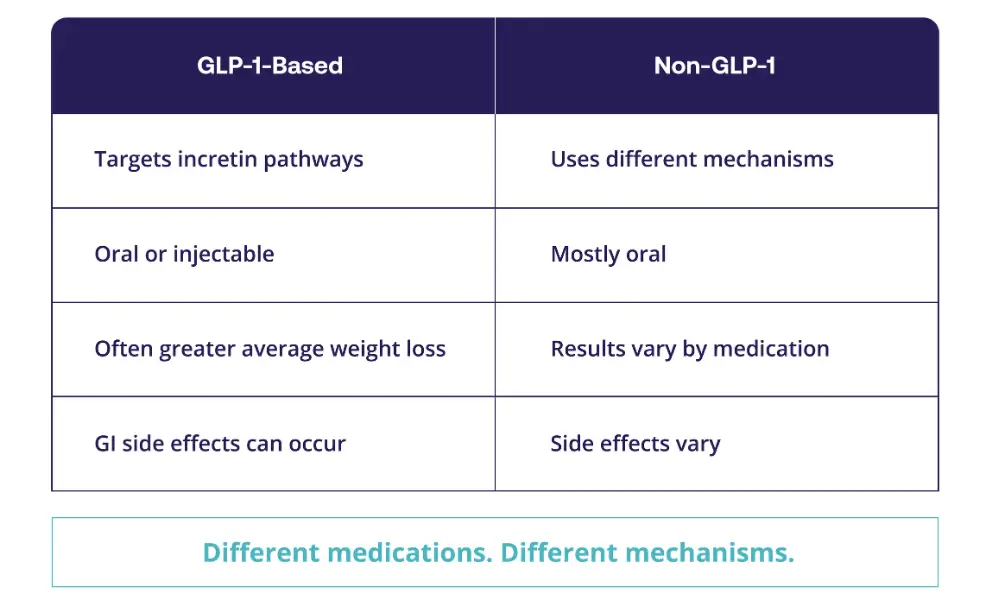
Different weight loss medications may suit different treatment needs. The choice can depend on the type of medication, how it is taken, and whether it fits the person’s medical situation.
GLP-1-based medications may be considered by people who:
- Want to consider medications with strong clinical evidence for weight loss
- Meet the FDA-approved criteria for a specific medication
- Are comfortable with the medication’s route of administration
Non-GLP-1 medications may be considered by people who:
- Prefer a pill or capsule rather than an injection
- Want to consider alternatives to GLP-1-based treatment
- Cannot use a particular GLP-1-based medication
- Need to consider other treatment or access factors
These options are not interchangeable. Each medication has its own approved uses, limitations, and safety considerations. A healthcare provider can help determine which options may be appropriate.
How Maverick’s Medical Weight Loss Program Can Support Sustainable Weight Loss
Sustainable weight loss often requires more than medication alone. At Maverick Medical Clinic, our medical weight loss program combines medical guidance, lifestyle support, and GLP-1 medications when appropriate to help patients work toward their individual weight loss goals.
Here is how our weightloss program help:
- Personalized treatment: Your provider considers your health history, weight loss goals, and individual needs when developing your treatment plan.
- GLP-1 medication when appropriate: For eligible patients, GLP-1 medication may be included as part of a medically supervised weight loss plan.
- Appetite and eating support: GLP-1 medications can help some patients feel fuller and reduce appetite, which may make it easier to follow a reduced-calorie eating plan.
- Lifestyle guidance: Medication works alongside healthy eating and other lifestyle changes that support long-term weight management.
- Medical monitoring: Regular follow-ups allow your provider to assess your progress, discuss side effects, and determine whether your treatment plan needs adjustment.
- Ongoing support: Weight management can take time. Continued guidance can help you stay focused on healthy habits and your individual goals.

Final Thoughts
GLP-1-based and related medications have changed medical weight management, with options such as semaglutide and tirzepatide showing substantial weight loss in clinical trials. However, GLP-1 alternatives for weight loss remain valuable options for appropriate patients.
Several factors can shape your treatment plan, including your health history, treatment goals, side effects, medication preferences, and access. A healthcare provider can help compare these factors and determine which options may fit your needs.
Frequently Asked Questions About GLP-1 Alternatives for Weight Loss
Non-GLP-1 options include phentermine-topiramate, naltrexone-bupropion, orlistat, and short-term phentermine. Each has different eligibility requirements, risks, and approved uses. A healthcare provider can determine which options may be appropriate.
There is no single GLP-1 medication that is best or safest for everyone. Semaglutide and tirzepatide can produce substantial weight loss, but suitability depends on your health history, other medications, risks, and treatment goals.
Phentermine-topiramate has demonstrated greater average weight loss than several other older non-GLP-1 medications in clinical trials. However, individual results and safety vary, so treatment decisions should consider medical history and tolerability.
Some non-GLP-1 medications can produce meaningful weight loss, but average results vary by medication. Clinical trials generally show greater average weight loss with newer incretin-based treatments than with several older oral options.
There is no single cheapest alternative because prices vary by medication, pharmacy, insurance coverage, and location. Some non-GLP-1 medications are available as generics, which may lower out-of-pocket costs compared with newer brand-name treatments.