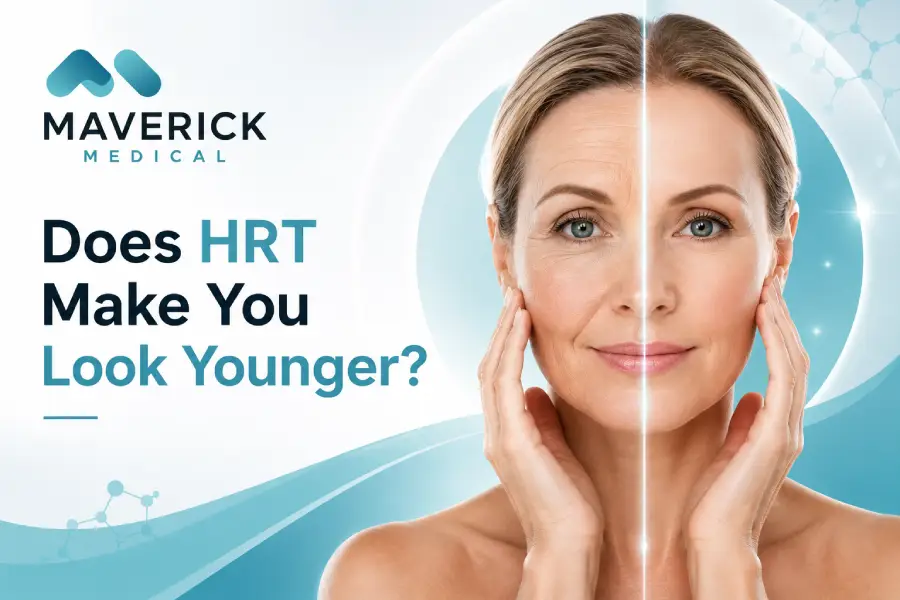
Yes, to some extent. Hormone replacement therapy restores estrogen and progesterone levels lost during menopause, which supports collagen production, skin hydration, and elasticity. This can visibly soften fine lines and restore a fuller, healthier look. That said, HRT does not stop the aging process entirely. It helps the body age more gracefully rather than reversing time.
Menopause changes far more than the reproductive system. It reshapes skin texture, hair thickness, and even facial structure over time. This guide breaks down exactly how hormones affect appearance, what changes are realistic, and what the research actually supports.
Why Falling Hormone Levels Speed Up Visible Aging
During the years leading up to and following menopause, estrogen levels can drop sharply. This decline does not happen gradually and evenly. It often speeds up noticeably in the first five years after menopause begins. Because hormone receptors exist throughout the skin, this drop directly affects:
- Collagen density, which keeps skin firm and structured
- Skin thickness, which thins as hormone support weakens
- Moisture retention, since hormones help skin hold onto water
- Wound healing speed, which slows as hormone levels fall
- Bone density in the face, which subtly changes facial contours over the years
Clinical research published in the journal Therapie found that hormone therapy increased measurements of skin thickness by ten to twenty percent in treated women compared to those who were not treated, particularly in areas away from sun exposure. This is why many women notice skin changes accelerating around the same time as other menopause symptoms.
Does HRT Make You Look Younger: The Science Behind Skin Renewal
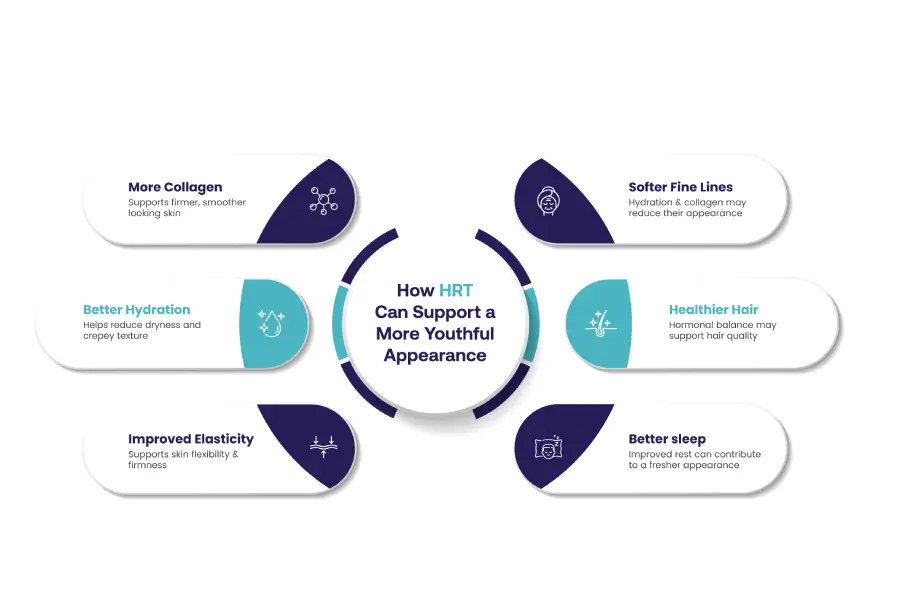
This is one of the most researched questions in menopause science, and the evidence leans toward yes. Replacing lost hormones stimulates fibroblasts, the skin cells responsible for producing collagen and elastin. These two proteins act as scaffolding, keeping skin firm and bouncy.
Research on postmenopausal women shows that estrogen treatment increases skin thickness, the activity of skin-renewing cells, and dermal collagen content. When hormone therapy is introduced, several changes tend to follow:
- Collagen production tends to increase within the first few months
- Skin thickness can improve, reducing a papery or crepey texture
- Natural oil production is better regulated, helping with both dryness and excess shine
- Fine lines around the eyes and mouth may appear softer as hydration improves
The effect is gradual, not immediate. Most women notice changes over three to six months of consistent therapy.
Does Estrogen Help Skin Look Younger Through Collagen and Hydration?
Estrogen plays a central role in skin health. Loss of estrogen accelerates the breakdown of collagen, reduces elastin, and slows wound healing, since estrogen decline is linked to reduced circulation and repair capacity in the skin. Restoring estrogen through therapy is believed to slow this decline and help skin feel and look more supple.
A clinical study on topical estrogen application found that estrogen may cause skin to look younger by reducing the appearance of wrinkles, largely through increased collagen production in sun-damaged skin. This supports the idea that estrogen’s benefits work at a cellular level, not just on the surface.
Does Estrogen Make You Look Younger, or Simply Healthier Looking?
There is a difference between looking younger and looking healthier, though the two often overlap. Estrogen does not reverse actual age. What it does is support the skin’s underlying structure, which makes it appear smoother and less dull. Many women describe their skin as looking “refreshed” rather than dramatically different after starting therapy.
| What Improves | What Doesn’t Reverse |
| Skin hydration and softness | Sun damage from past years |
| Fine line depth | Genetic aging patterns |
| Skin tone evenness | Existing deep wrinkles |
| Overall skin texture | Bone loss that already occurred |
Does Estrogen Keep You Young Beyond Just Skin Appearance?
This question goes beyond skin. Estrogen supports:
- Bone density, lowering fracture risk as women age
- Heart health, by supporting healthy cholesterol balance
- Cognitive function, with some studies linking estrogen to memory support
- Joint comfort, since estrogen affects cartilage and connective tissue
When these systems stay supported, women often report feeling more energetic and resilient. This quality tends to show up in posture, glow, and overall vitality, even when it is harder to measure directly.
Does Progesterone Make You Look Younger by Improving Sleep and Balance?
Estrogen usually gets the spotlight, but progesterone matters too, since it works alongside estrogen in most hormone therapy plans. It has a calming effect that improves sleep quality, helps balance estrogen so skin does not become overly oily or reactive, and may reduce water retention linked to facial puffiness. Since deep, consistent sleep is closely tied to reduced under-eye darkness and a brighter complexion, this indirect effect can be just as meaningful as estrogen’s direct effect on skin.
What Does an Anti Aging Hormone Replacement Therapy Program Actually Includes
Anti aging hormone therapy clinics employ a targeted approach where hormone levels are tested and restored specifically to address aging-related symptoms. A typical program includes:
- Baseline bloodwork to measure estrogen, progesterone, and sometimes testosterone
- A personalized dosage plan, often starting low and adjusting based on response
- Regular follow-up testing every few months to ensure hormone levels stay balanced
- Lifestyle guidance, since diet, sun exposure, and sleep all affect results.
Can HRT Reverse Aging, or Only Slow Certain Visible Signs?
No credible research supports the idea of complete reversal. Hormone therapy cannot undo:
- Sun damage accumulated over decades
- Genetic predispositions to wrinkles or sagging
- Volume loss from years of collagen decline before treatment began
Reviews of hormone therapy note that hormonal skin aging is quantitatively smaller than sun-related aging, and its treatment is generally easier to manage in comparison. What therapy can do is slow the rate of further decline and improve skin quality moving forward. Women who start therapy earlier in menopause tend to see more noticeable improvements than those who begin many years later, simply because less structural damage has occurred by that point.
Does HRT Make You More Attractive Through Confidence and Energy?
Attractiveness here is partly physical and partly psychological. On the physical side, improvements in skin, hair thickness, and energy levels contribute to a healthier appearance. On the psychological side, better sleep leads to a more alert expression, reduced hot flashes mean less visible flushing, and improved mood can translate into more relaxed facial features. Feeling physically better often shows up as looking more at ease and confident.
Does Estrogen Make You Prettier by Restoring Natural Balance?
This is best understood as restoring balance rather than creating a new look. It does not change facial features. It supports smoother skin texture, fuller and shinier hair, reduced puffiness from better hormone regulation, and a more even skin tone. The result is often described as looking like yourself, only well rested, rather than a dramatic transformation.
Which Hormones Make You Look Younger: A Breakdown by Function
The answer depends on which specific benefit you are looking for:
- Estrogen, the primary driver of skin collagen, hydration, and elasticity
- Progesterone, which supports sleep quality and balances estrogen’s effects
- Testosterone (in small, carefully monitored amounts for women), which supports muscle tone and indirectly affects facial firmness
- DHEA, a precursor hormone some clinics include to support overall balance and is also linked to thicker hair growth
- Growth hormone, which naturally declines with age and plays a role in skin repair, though it is typically addressed separately from standard HRT
Most anti-aging protocols focus on estrogen and progesterone first, since these have the most consistent research support for skin benefits.
Building Realistic Expectations Around Timeline and Results for Hormone Replacement Therapy
Hormone therapy works gradually, and expecting overnight results can lead to disappointment. A general timeline looks like this:
- First 4 to 6 weeks: Reduced hot flashes and improved sleep quality
- 2 to 3 months: Noticeable improvement in skin hydration
- 3 to 6 months: Visible softening of fine lines and improved skin tone
- 6 to 12 months: More stable, long-term improvements in skin texture and thickness
Pairing hormone therapy with sun protection, a nutrient-rich diet, and good sleep habits tends to produce the best combined results.
Maverick Medical Hormone Replacement Therapy Program
For women who want professional guidance rather than a generic protocol, clinics like Maverick Medical Care take an approach to hormone health that goes beyond quick fixes, focusing on uncovering root causes instead of simply treating symptoms or relying on standard lab ranges. Their hormone replacement therapy is designed to help restore balance, energy, and clarity for patients dealing with fatigue, mood changes, weight fluctuations, or low libido.
What makes the approach different
- Root cause focus: Looks past standard lab ranges to find the real source of symptoms
- Personalized timelines: Programs range from a focused four month reset to a comprehensive year long plan
- Broad coverage: Addresses hormone balance, weight management, fatigue, and brain fog together
- Test-based starting point: Baseline labs include estrogen, progesterone, testosterone, cortisol, and DHEA to map overall hormone and stress balance
- Adjustable dosing: Levels are re-tested over time so treatment can be fine-tuned rather than fixed
Final Thoughts
Hormone replacement therapy offers genuine, research-backed benefits for skin quality, hydration, and overall vitality during and after menopause. While it cannot reverse aging entirely, it can help the body maintain a healthier, more youthful appearance over time when paired with good lifestyle habits and proper medical guidance. Anyone considering this path should consult a qualified healthcare provider to build a plan suited to their unique health profile.
Common Questions About Hormone Replacement Therapy
No. HRT supports hydration and collagen, giving a fuller look, but it does not restructure bone or reshape facial contours.
Most people notice hydration improvements within two to three months, with fuller changes appearing closer to six months.
Yes, though benefits are usually smaller since more collagen loss and sun damage may have already occurred by then.
It can improve firmness slightly by boosting collagen, but it will not tighten already sagging skin like a cosmetic procedure would.
Some benefits fade gradually after stopping, since collagen support depends on continued hormone presence in the body.
Not really. Progesterone mainly supports sleep and balance, while estrogen drives most of the direct collagen and hydration improvements.