
Hormones quietly control much of how your body functions each day. They influence your energy, your mood, your sleep, your metabolism, and even how your skin and muscles age over time.
Want to know what are the signs that you need hormone replacement therapy, especially when they start feeling “off” without a clear reason. The truth is, the signs may vary from person to person. Age, gender, lifestyle, and overall health all play a role in how hormone changes show up in the body.
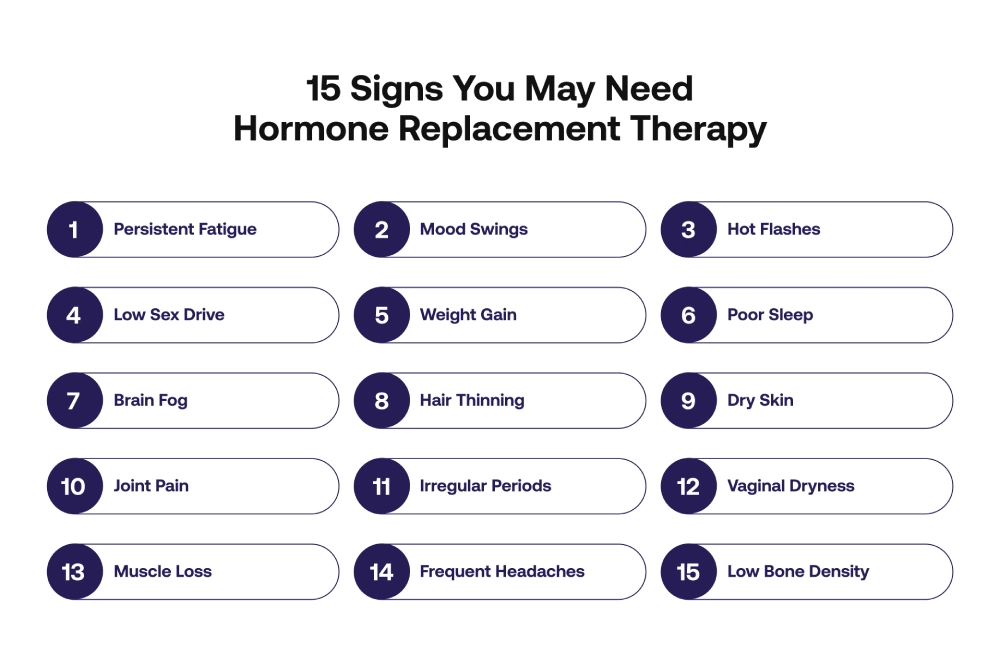
Doctors usually look at a pattern of symptoms, along with blood test results, to understand what is really happening inside the body. That said, the common signs that you need hormone replacement therapy include:
- Persistent Fatigue and Low Energy
- Mood Swings and Irritability
- Hot Flashes and Night Sweats
- Reduced Sex Drive
- Weight Gain and Slow Metabolism
- Trouble Sleeping
- Brain Fog and Memory Issues
- Hair Thinning and Hair Loss
- Dry Skin and Loss of Skin Elasticity
- Joint Pain and Muscle Aches
- Irregular Menstrual Cycles
- Vaginal Dryness
- Decreased Muscle Mass and Strength
- Headaches or Migraines
- Decreased Bone Density
1. Persistent Fatigue and Low Energy
This is a deep, ongoing exhaustion that does not improve with rest or sleep. Low estrogen, low testosterone, and thyroid imbalances are common causes. Hormones help the body’s cells produce energy efficiently, so when levels drop, that process slows down, leaving people feeling drained no matter how much they sleep.
2. Mood Swings and Irritability
Estrogen, progesterone, and testosterone all affect neurotransmitters, the brain chemicals that regulate emotions. When hormone levels shift, these chemicals become unstable, leading to mood swings, anxiety, or sudden irritability. Many people notice emotional changes before any physical symptoms appear, making mood a useful early clue.
3. Hot Flashes and Night Sweats
Hot flashes bring sudden heat, sweating, and sometimes a fast heartbeat. Night sweats are a related symptom that can wake a person during sleep. Both happen because falling estrogen levels affect the hypothalamus, the part of the brain that controls body temperature.
4. Reduced Sex Drive
A noticeable drop in sex drive can affect both men and women as hormone levels decline. Testosterone plays a major role in desire for men, while estrogen and testosterone both influence desire in women. This sign is often overlooked, but it is one of the strongest indicators of a hormone imbalance.
5. Weight Gain and Slow Metabolism
Unexplained weight gain, especially around the abdomen, is often linked to hormone changes. Hormones help regulate how the body stores and burns fat. When levels fall out of balance, metabolism slows down, making weight harder to manage even with the same diet and exercise routine as before.
6. Trouble Sleeping
Low progesterone can make it difficult to fall asleep or stay asleep through the night. Poor sleep then worsens other symptoms, like fatigue and irritability, creating a cycle that is hard to break. Many people only connect their sleep issues to hormones once other symptoms appear too.
7. Brain Fog and Memory Issues
Struggling to concentrate or forgetting small details is often called brain fog. Estrogen supports healthy brain function, including memory and focus, so a drop in this hormone can make clear thinking feel harder than usual. This symptom typically improves once hormone levels stabilize.
8. Hair Thinning and Hair Loss
Thinning hair or noticeable shedding can happen when estrogen and thyroid hormones fall out of balance. Hair growth relies on a steady hormone cycle, so a disruption can push more hair follicles into a resting phase. This often shows up gradually, making it easy to miss at first.
9. Dry Skin and Loss of Skin Elasticity
Skin depends on estrogen to stay hydrated and firm. When estrogen levels drop, the skin can lose collagen, leading to dryness, thinning, and reduced elasticity. Many people notice their skin feels rougher or looks less plump than it used to.
10. Joint Pain and Muscle Aches
Aching joints and sore muscles without an obvious injury can be tied to falling estrogen levels. Estrogen has a role in reducing inflammation and supporting joint tissue. When levels drop, inflammation can rise, leading to stiffness and discomfort, especially in the mornings.
11. Irregular Menstrual Cycles
Cycles that become shorter, longer, heavier, or unpredictable often signal shifting estrogen and progesterone levels. This is common during perimenopause, when hormone production starts to fluctuate before periods stop altogether. Tracking cycle changes over a few months can help identify a clear pattern.
12. Vaginal Dryness
Lower estrogen levels can reduce natural lubrication and thin the vaginal tissue. This can cause discomfort, itching, or pain during intimacy. It is one of the more physical signs of hormone decline and tends to become more noticeable as estrogen levels continue to fall.
13. Decreased Muscle Mass and Strength
Testosterone supports muscle growth and strength in both men and women. As testosterone levels decline, muscle mass can shrink and strength can drop, even in people who stay physically active. This change often happens gradually, making it easy to attribute to age alone.
14. Headaches or Migraines
Fluctuating estrogen levels can trigger headaches or worsen existing migraines. This is because estrogen affects blood vessels and certain brain chemicals linked to pain signals. Headaches that follow a pattern tied to hormonal shifts are worth mentioning to a doctor.
15. Decreased Bone Density
Estrogen helps protect bone strength by slowing natural bone breakdown. When estrogen levels fall, bones can lose density faster than the body can rebuild it, raising the risk of fractures over time. This change usually happens silently, without any obvious pain or warning signs.
Why Do I Feel Exhausted After Starting HRT?
Some people who have started HRT and feel exhausted find this confusing, especially when they expected quick improvement soon after beginning treatment. This reaction is more common than most people realize.
A few reasons this happens include:
- The body often needs several weeks to adapt to new hormone levels before energy improves.
- The initial dosage may need fine-tuning to match your individual needs.
- Fatigue during this phase doesn’t necessarily mean the treatment isn’t working. It can simply be part of the process as your system adjusts.
If exhaustion continues for several weeks without improvement, it’s worth scheduling a follow-up with your provider rather than stopping treatment on your own. At Maverick, our team can:
- Review your hormone levels
- Adjust your treatment plan if needed
- Help you understand whether what you’re experiencing is a normal part of adjustment or a sign that something needs to change
Summary
Recognizing what are the signs that you need hormone replacement therapy early can make a real difference in how you feel each day. Fatigue, mood swings, hot flashes, low sex drive, weight gain, poor sleep, and brain fog are all worth paying attention to, especially when they appear together or persist over time.
If these signs sound familiar, speaking with a doctor and getting proper hormone testing is the best next step toward understanding what your body truly needs.
FAQs About What Are the Signs That You Need Hormone Replacement Therapy
The most reliable way is through a blood test ordered by a doctor. Along with testing, watch for fatigue, mood changes, poor sleep, or low sex drive. These signs, especially together, often point to an imbalance worth checking further.
Hormone replacement therapy, or HRT, is a treatment that restores hormone levels, usually estrogen, progesterone, or testosterone, to a healthy range. It is commonly used for menopause, andropause, or other conditions where natural hormone production has significantly declined.
Yes, low estrogen can cause tiredness by disrupting sleep and lowering energy levels. Estrogen also affects mood and brain function, so a drop in this hormone often leads to both physical and mental fatigue throughout the day.
Yes, HRT often improves fatigue once hormone levels stabilize. Many people notice better energy within a few weeks of starting treatment. Results vary by individual, so working closely with a doctor during this process matters.
In early stages, some people feel more tired as the body adjusts to new hormone levels. This is usually temporary. If tiredness continues beyond a few weeks, a dosage review with a doctor is a reasonable next step.
Yes, this can happen during the adjustment period or if the dosage is not yet balanced for the individual. It does not mean treatment is failing. Regular follow-ups help fine-tune the plan for better results.