
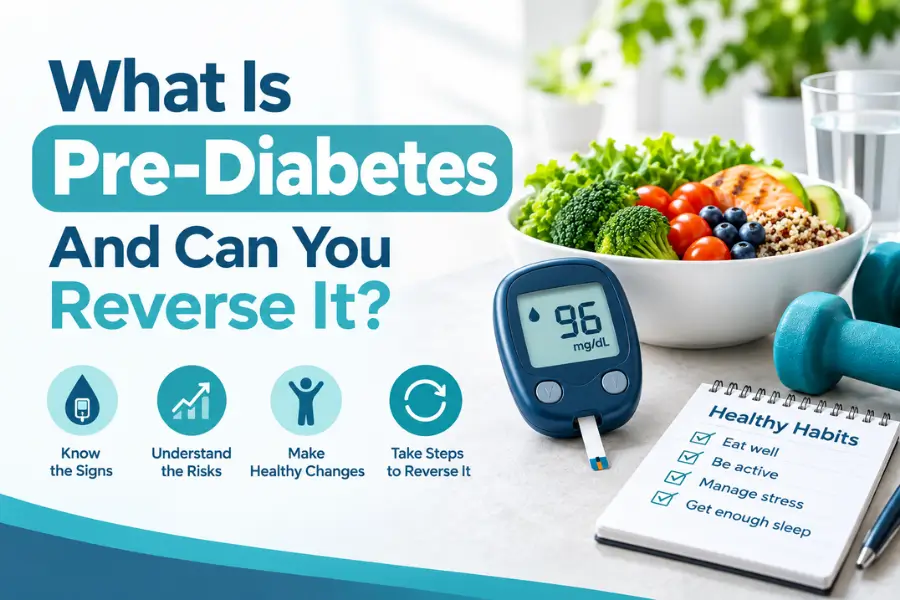
Prediabetes describes a stage where blood glucose sits above the healthy range but has not yet crossed into type 2 diabetes territory. Because it rarely announces itself, many people carry it for years without realizing anything has shifted. Prediabetes can, in the majority of cases, be brought back under control. Adjustments to food choices, movement, sleep, and weight are enough for many people to see their numbers return to normal.
What Is Prediabetes and What Blood Sugar Numbers Define It?
Prediabetes is a measurable rise in blood glucose that sits between “normal” and “diabetic” on standard lab tests, signaling that the body’s ability to regulate sugar has started to slip. A person is not yet diabetic at this stage, but the numbers are high enough to warrant attention and action.

Blood Sugar Ranges Used for Prediabetes Diagnosis
Three tests are used to place someone in this category:
- Fasting glucose: 100 to 125 mg/dL (a healthy result is below 100)
- A1C: 5.7% to 6.4% (a healthy result is below 5.7%)
- Oral glucose tolerance test, two hours after a sugary drink: 140 to 199 mg/dL
How Many Adults in the U.S. Actually Have Prediabetes?
This is not a rare finding, it touches a large portion of the adult population.
- Close to 115.2 million adults in the U.S. carry a prediabetes diagnosis
- An estimated 8 in 10 of them have never been told
- Many primary care visits do not include the blood work needed to catch it
What Causes Insulin Resistance and Who Is Most at Risk?
At the root of prediabetes sits insulin resistance. Muscle, liver, and fat cells stop responding properly to insulin, so the pancreas works harder and sugar starts backing up in the bloodstream.
Lifestyle Factors That Raise Your Risk
These are the areas where daily choices have the most influence:
- Extra weigh]t carried around the midsection and internal organs
- A mostly sedentary routine with little structured movement
- Frequent consumption of sugary drinks and heavily processed meals
- Chronic sleep shortage or an undiagnosed breathing disorder during sleep
- Ongoing, unmanaged stress
Genetic and Medical Risk Factors You Cannot Change
These raise the odds regardless of lifestyle, and simply call for closer monitoring:
- A parent or sibling with type 2 diabetes
- Turning 45 or older
- A pregnancy affected by gestational diabetes
- Polycystic ovarian syndrome
- Belonging to a Black, Hispanic, Native American, Pacific Islander, or Asian American background, which carries elevated risk independent of weight
What Early Warning Signs Point to Prediabetes?
For most people, prediabetes gives almost no warning at all, which is exactly why it slips past unnoticed for so long.
Subtle Physical Signs Some People Notice
A handful of individuals do pick up on small changes:
- A darkened, slightly thickened patch of skin at the neck, armpits, or knuckles
- Feeling unusually drained shortly after eating
Signs That May Point Toward Progression Beyond Prediabetes
As glucose climbs further, a different set of clues can appear:
- Needing to urinate more often, particularly overnight
- Feeling thirsty even after drinking fluids
- Hunger that returns quickly after a full meal
- A general sense of low energy throughout the day
Which Blood Tests Confirm a Prediabetes Diagnosis?
Because there is little to feel, diagnosis depends entirely on bloodwork rather than symptoms a person might report.
- A fasting glucose test, taken after roughly eight hours without food, is often part of a routine metabolic panel
- An A1C test reflects the average glucose level over the previous two to three months and does not require fasting
- Either result, when it falls into the ranges listed earlier, is enough for a physician to confirm the diagnosis
Is Prediabetes Reversible According to Clinical Research?
The clinical data says yes, and the strongest proof comes from a large government funded trial.
- The Diabetes Prevention Program followed over 3,000 adults with elevated glucose
- Those who trimmed 5% to 7% of their body weight through a guided program cut their odds of developing type 2 diabetes by 58%
- A comparison group taking metformin alone saw a 31% reduction
- A decade long follow up showed the protective effect held steady over time
- More recent research suggests the first one to two years after diagnosis may offer the best odds of a full return to normal glucose levels
Does Prediabetes Go Away on Its Own Without Treatment?
In most cases, no. It tends to move forward rather than fade quietly.
- Somewhere between one in four and one in three untreated cases advance to full type 2 diabetes within five years
- A minority see numbers drift back to normal on their own, usually tied to an unplanned shift in weight or routine
- Left alone, it also raises the odds of stroke, heart disease, and early damage to the kidneys and nerves
Can Prediabetes Be Cured Permanently or Only Managed?
Most physicians would describe the result as remission rather than a permanent cure.
- The tendency toward insulin resistance stays in the background even after glucose normalizes
- Old habits creeping back can cause numbers to climb again
- Even so, a large share of patients hold normal readings for years by staying consistent
How Often You Should Get Retested After Diagnosis
Ongoing checkups keep this progress from slipping unnoticed:
- An A1C recheck every three to six months early on
- A yearly test once results have stabilized
- Prompt follow up if weight or habits change significantly
Can Pre Diabetes Be Reversed Through Diet and Exercise Alone?
The research says this is where the real leverage sits.
Food Choices That Lower Blood Sugar Naturally
- Cut back on refined grains, sugary drinks, and packaged snacks
- Fill more of the plate with vegetables, legumes, and whole grains
- Push fiber intake toward 25 to 30 grams a day to slow sugar absorption
Exercise Routines That Improve Insulin Sensitivity
- 150 minutes a week of moderate activity such as walking or swimming
- Two short strength training sessions weekly to give muscle more capacity to store glucose
How Weight Loss and Better Sleep Support Reversal
- A 5% to 10% drop in body weight is enough to shift lab results meaningfully
- Treating a sleep disorder, if one is present, often improves glucose control on its own
When Does a Doctor Recommend Medication Instead of Lifestyle Change Alone?
- Metformin may be recommended for those with a BMI of 35 or higher, a younger age, or a history of gestational diabetes
- Lifestyle change still outperforms medication alone in most studies
- Newer drug classes, including GLP-1 agonists, are currently being studied for this use as well
What Happens Long-Term if Prediabetes Is Left Unmanaged?
A prediabetes result is not a fixed sentence. It is a checkpoint that leaves room to change direction.
- People who take no action often see the condition progress to full diabetes within several years
- Those who adjust habits early frequently avoid that outcome altogether
- Even partial progress lowers risk, so an imperfect effort still counts for something
Can Prediabetes Be Prevented Before It Ever Develops?
The same habits that reverse prediabetes also work to keep it from developing at all.
- Staying physically active on a regular basis
- Keeping body weight in a healthy range for your frame
- Building meals around whole, minimally processed foods
- Avoiding tobacco products
Some individuals carry such a strong genetic tendency that prevention efforts only partly offset the risk, which makes early screening worthwhile regardless.

Frequently Asked Questions About Prediabetes
Yes. Weight is one of several contributing factors, not the only one. Genetics, age, and how fat is distributed in the body all play a role, so people at a healthy weight can still receive this diagnosis.
Exercise on its own has measurable benefits. One study found that consistent activity of about 150 minutes a week helped a meaningful share of participants return to normal glucose levels. Pairing it with dietary changes tends to produce faster, more reliable results.
There is no fixed number. Some people see improvement within a few months of consistent effort, while others need a year or longer. Research suggests the first year or two after diagnosis tends to offer the best response to lifestyle changes.
No. Progression is common when nothing changes, but it is not automatic. A meaningful share of people who make sustained changes never progress to a full diabetes diagnosis.
Yes. Both raise levels of cortisol and other hormones that interfere with insulin function, which is why sleep quality and stress management are included alongside diet and exercise in most treatment plans.
Waiting without making any changes allows the condition more time to progress in a meaningful share of cases. Most physicians recommend starting lifestyle changes right away and using the retest to measure progress, rather than treating it as a waiting period.
Some research suggests time restricted eating patterns can improve insulin sensitivity for certain individuals, though results vary by person. It is not a replacement for overall diet quality, and it is worth discussing with a physician before starting.